
What is sewer line cleaning?
Sewer line cleaning clears a blockage from the main line, the large pipe that carries wastewater from every drain in the house out to the city sewer. Because every fixture feeds into it, a clog here doesn't stay in one place. It shows up as slow drains, gurgling toilets and, when it gets bad, sewage coming up at the lowest point in the house.
The main line runs from the house to a connection at the public sewer. Most homes have a cleanout somewhere along it, a capped pipe that gives a plumber direct entry. If one drain is slow and the rest are fine, you probably need drain cleaning instead. If several act up together, this is the page you want. Call (501) 530-9119 and we'll connect you with an independent provider, as part of the full range of Hot Springs Drains & Sewer help.
How a main sewer line gets cleared
A main line is longer and wider than a fixture drain, so providers use heavier tools.
- Sewer cable machine. A motor spins a long steel cable fed through the cleanout. The head, chosen for the blockage, bores through it. Root-cutting heads have blades for roots; others are for grease or soft debris.
- Hydro-jetting. A hose with a nozzle sends high-pressure water around the pipe wall, which scours grease and scale instead of just punching a hole. Hydro-jetting suits heavy buildup, though older pipe should be checked first.
- Camera inspection. After the line is open, a camera shows what caused the clog and whether the pipe is damaged. A sewer camera inspection is what separates a one-time clog from a recurring one.
- Line locating. A locator tracks the camera head from above ground, so any repair is dug in the right place.
Clearing the line normally goes through the cleanout and doesn't need digging. That's one reason knowing where yours is matters.
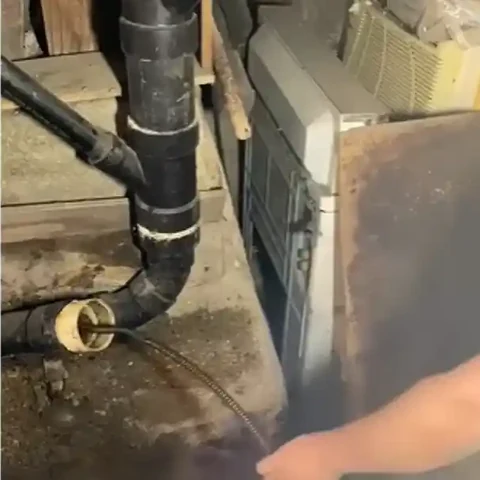
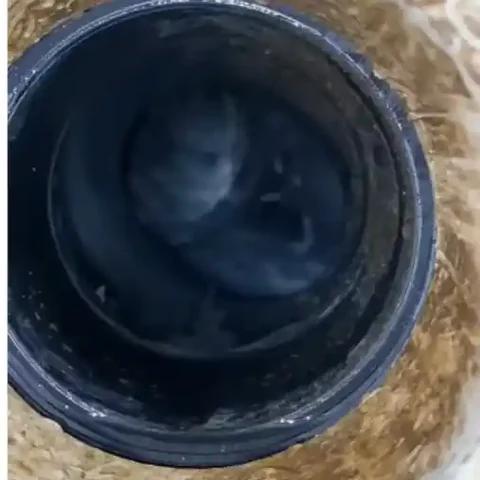
Before and after clearing a blocked sewer line.
8 signs your main sewer line is clogged
- Toilets gurgle when you run the tub, shower or washer.
- Several drains are slow at the same time.
- The lowest drain in the house, often a tub or floor drain, backs up first.
- Flushing a toilet makes water rise in the tub or shower.
- A sewer smell hangs around the house or yard.
- The washing machine drains slowly or spills into the standpipe.
- Drains clear for a day or two, then slow down again.
- A patch of lawn above the line stays wet or turns unusually green.
If the pattern is only one fixture, it's likely local. If it's two or more fixtures, treat it as the main line, and stop running water until it's checked.
What blocks main sewer lines around Hot Springs
These are the usual causes, roughly in order of how often providers run into them.
- Tree roots. Wooded lots are common here. Roots find joints and hairline cracks, grow inside the pipe, and catch everything that flows past.
- Grease buildup. Cooking grease cools and hardens on the pipe wall, narrowing it a little more each week.
- Wipes and paper products. "Flushable" wipes don't break down like toilet paper and gather into plugs.
- Sags and offset joints. A section that has sunk holds water and debris. A joint that has shifted catches solids.
- Cracked or collapsed pipe. A lot of housing here is decades old, and old pipe can break down.
- Heavy rain and wet ground. Saturated soil can push groundwater into cracked pipe and strain the public system, which can make a marginal line fail.
The cause decides the fix. Grease and soft debris are a cleaning job. Roots may need cutting now and a repair later. A collapsed pipe can't be cleaned at all. That's why a camera usually follows the cable, and why a provider who recommends sewer line repair should show you the footage.
Safe checks to try first
Main line problems are rarely a good DIY project, but a few checks help you describe the problem.
- Flush a toilet and watch the tub. If water rises there, the main line is likely restricted.
- Check whether every fixture is affected or only the lowest ones.
- Locate your cleanout, but leave the cap on if the line is backed up. Opening it can release sewage.
- Stop running water, including the dishwasher and washing machine.
Don't pour chemical drain cleaner into a backed-up main line, and think twice before renting a sewer machine. Chemicals can splash and won't move roots, and a cable can hook, injure you, or damage old pipe.
Take a photo of the cleanout and write down when the backups started. A provider can plan a main line visit much better with those two things.
What a provider does on a main line visit
- Asks what's affected. Which fixtures, since when, and whether it follows rain or laundry.
- Finds the cleanout. Or the nearest access point, which may be a toilet.
- Clears the line. With a cable and the right head, or a jetter.
- Runs the camera. To see roots, sags, cracks or buildup, and to locate the problem.
- Tests the flow. Water runs through the system to confirm it drains freely.
- Explains the options. Whether to leave it, schedule maintenance, or repair, in plain language.
Ask for the footage of any problem they say they found. If they recommend a repair, ask for it in writing. Our sewer and drain help across Hot Springs overview explains how the referral works and what to ask any provider.
What to expect after the line is cleared
Once water runs freely, the line is open, but the cause may still be there. A clean camera run is a good sign, and a provider may suggest keeping an eye on it. If the camera shows roots, a sag or a cracked joint, the line can clog again, sometimes within weeks or months, and clearing it again only buys time.
It helps to ask what the provider saw, how far along the line they looked, and whether any section worries them. Keep their notes or footage. If the problem comes back, that record tells the next provider where to start, and it tells you whether you're dealing with a habit, such as grease, or a defect in the pipe.
Keeping a main line clear
- Keep grease, wipes and paper towels out of the drains and toilets.
- Don't plant thirsty trees or shrubs directly over the line.
- Know where your cleanout is and keep it accessible.
- Ask a provider about a camera look if backups return.
- Think about a backwater valve if low fixtures back up during heavy rain.
Rental owners and restaurants can ask about scheduled maintenance. Not every provider offers it, but heavy-use lines benefit.
What changes the cost of sewer line cleaning
Providers set their own prices, and we don't quote them. These are the factors that move any quote.
| Factor | Why it matters |
|---|---|
| Access | A cleanout is quick. Without one, the provider may pull a toilet or add a cleanout. |
| Length and depth | A longer or deeper line takes more cable and time. |
| Cause | Grease, roots and collapsed pipe call for different tools. |
| Pipe condition | Old, cracked pipe may limit which methods are safe. |
| Camera | A camera adds time but shows why the line clogged. |
When a sewer backup is an emergency
A main line backup is an emergency when:
- Sewage is coming up through a floor drain, tub or toilet.
- Several fixtures back up together.
- Sewage is spreading across floors.
Sewage carries bacteria. Stop using water, keep people and pets away, and call us. We're open Monday to Saturday, 8 am to 6 pm, and closed Sundays. If it starts outside those hours, keep the water off and call when we open.
Main sewer line cleaning questions
How do I know if my main sewer line is clogged?
Several fixtures slow or gurgle at once, the lowest drain backs up first, or flushing a toilet raises water in the tub. One slow drain alone is usually a local clog.
What is the difference between sewer line cleaning and drain cleaning?
Drain cleaning clears one fixture's drain or a short branch. Sewer line cleaning clears the main line that all of them feed into, using longer cables or a jetter.
Does cleaning the line fix roots permanently?
No. Cutting roots clears the line, but they grow back if the joint or crack stays open. A camera shows where they get in, and a repair is what stops them.
How often should a main sewer line be cleaned?
There's no set schedule. A line that never backs up may not need it. If it clogs repeatedly, get a camera look, and ask a provider about maintenance for heavy-use properties.
Who is responsible for a sewer line problem?
It depends on where the problem is. A camera inspection shows where it sits, and the provider can explain what that means for your property. Ask for the findings in writing before you agree to a repair.
Will the provider need to dig up my yard?
Cleaning normally goes through the cleanout and needs no digging. A repair may, depending on what the camera finds, and you should get that explained and quoted in writing first.