
Why drains and sewers work harder in downtown Hot Springs
Downtown Hot Springs combines old buildings, heavy restaurant and hotel use, and big visitor crowds, which is a hard mix for drains and sewer lines. If you run a business, manage a building or own a property along Central Avenue and the streets around it, you're dealing with all three.
Start with age. The Central Avenue Historic District and Bathhouse Row make the downtown core one of the best-known parts of the city, and many buildings here are decades old, some closer to a century. Older buildings often have older drain and sewer pipe, and that pipe was never sized for today's kitchens, laundries and guest loads. Call (501) 530-9119 and we'll connect you with an independent provider who works in older buildings. It's the downtown side of our main Hot Springs page.
Then the visitors. Hot Springs draws crowds all year, with hotels, restaurants, bars and rentals packed into a small area. Use goes up on event weekends and busy seasons, and drains that cope on a quiet Tuesday can fail on a full Saturday. Grease from kitchens, wipes in guest bathrooms and laundry lint all end up in the same lines.
Finally, weather. Heavy rain sends water toward low ground, and buildings with basement-level restrooms or floor drains can see more trouble in wet weather. A provider can check whether that applies to your building.
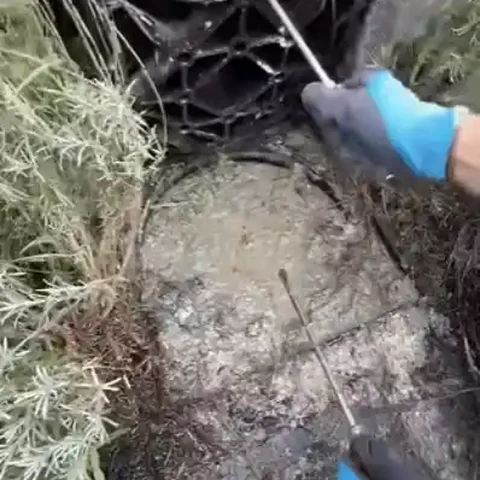
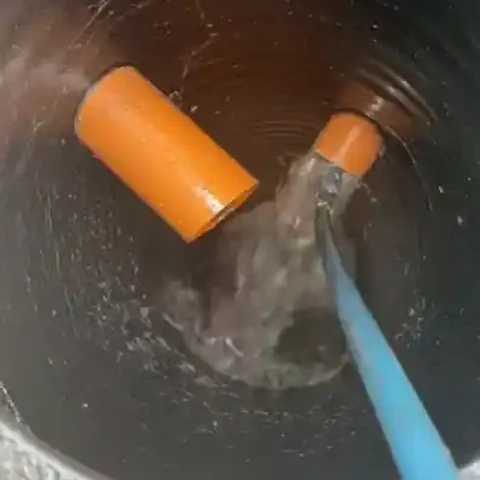
Before and after clearing a clogged outdoor drain.
The four services downtown businesses call about
Commercial drain cleaning
Restaurants, bars and hotels send a lot of grease and food waste down the line, and a blocked kitchen drain can stop service. A provider can clear the line and set up a maintenance plan. See commercial drain cleaning for what that looks like and what to ask.
Hydro-jetting
Grease leaves a film on pipe walls that a cable can't remove, and old lines clog again quickly. High-pressure water cleans the whole pipe, after a camera confirms the pipe can take it. That check matters in older buildings, so read about hydro-jetting before you agree to it.
Sewer camera inspection
If you're buying, leasing or renovating an older building, you can't see the lines under the floor or slab. A camera shows cracks, roots, sags and collapsed sections before they turn into your problem. A sewer camera inspection also gives you a record to show a landlord, buyer or insurer.
Backwater valves
Buildings at lower elevations, or with basement-level restrooms and floor drains, can get sewage coming up during heavy rain. A valve blocks backflow from the main. It's only one part of the answer, and the guide to backwater valves and cleanouts explains where it helps and where it doesn't.
Old pipe in old buildings: what providers watch for
Downtown plumbing often has layers. A building may have original clay or cast iron lines, newer plastic added in a remodel, and a connection where the two meet. Those joints are common weak points. Additions and conversions can also tie new fixtures into old lines that weren't built for the extra load.
Lines under slabs and basement floors are hard to reach, so problems tend to stay hidden until a backup. A camera run before a remodel or after a repeat clog shows what's down there, and it can save a lot of guessing. If a camera finds damage, the next step is sewer line repair, and you'll want options in writing.
What a downtown visit usually involves
- Working in an occupied building, so access and timing need to be agreed in advance.
- Clearing the blockage, then running a camera to find the cause.
- Documenting the work with photos and an itemized invoice you can pass to an owner or manager.
- Recommending a plan: one-off cleaning, scheduled maintenance, or repair.
Downtown building checklist
- Know where your cleanouts, floor drains and grease traps are, and label them.
- Keep records of trap and interceptor cleaning and drain service.
- Ask whether your lease makes you or the owner responsible for drain work.
- Camera the lines before you sign a lease or buy an older building.
- Check lower-level restrooms and floor drains for backflow risk.
- Plan a drain check before busy weekends and seasonal peaks.
- Train staff on what not to put down drains: grease, wipes, paper towels.
Before a big weekend, run water through rarely used floor drains and check slow ones. A clog found on Thursday is cheaper than one found during Saturday dinner service.
Nearby areas we cover
We send calls across the wider area as part of our drain and sewer services in Hot Springs. If your property isn't downtown, see Hot Springs Village for wooded lots and rentals, Lake Hamilton and Lake Catherine for lake homes, or Piney for the ZIP 71913 area. We also take calls from Fountain Lake, Mountain Pine, Lonsdale, Jessieville, Pearcy and Royal, and coverage there depends on the provider.
We're open Monday to Saturday, 8 am to 6 pm, and closed Sundays. If sewage is coming up inside a building, stop using water in the affected area, keep people away and call when we open. For food businesses, check with the health authority that covers you about whether you can keep operating.
Downtown Hot Springs drain questions
Why do downtown restaurants have so many grease clogs?
High volume and older lines. Kitchens put a lot of grease through pipe that may be narrow, rough or sagging, and it builds up faster than it would in newer plumbing.
Who handles drain problems in an older downtown building, the owner or the tenant?
It depends on your lease and what caused the problem. Check the lease, document what the provider finds, and ask the owner early if the issue is the building's pipe.
Can drain work be scheduled around service hours?
Sometimes. It depends on the provider's schedule. Call us Monday to Saturday, 8 am to 6 pm, and ask about timing when we connect you.
Does heavy rain affect drains in downtown Hot Springs?
It can. Heavy rain moves water toward low ground, so lower-level drains may back up in wet weather. A camera and a provider's check of your elevation show whether it applies.
Which ZIP codes do you cover in Hot Springs?
Our coverage includes ZIP codes 71901, 71902, 71903, 71909, 71910, 71913 and 71914, across Hot Springs and Hot Springs Village.