
Why drains and sewers need attention in Hot Springs Village
Hot Springs Village is a wooded community with many second homes and rentals, which makes roots, empty houses and guest turnover the main drain and sewer headaches here. If you live here, own a home you only use part of the year, or manage rentals, those three show up again and again.
Lots here are treed, and plenty of properties sit empty for weeks at a time. Call (501) 530-9119 and we'll connect you with an independent provider who can sort out what's happening. Think of this page as the Village chapter of sewer and drain help across Hot Springs.
Trees come first. Roots look for water, and a joint or hairline crack in a sewer line is an open invitation. A root ball can go from a slow drain to a full backup without warning. Empty houses are second. Water in a drain trap evaporates when no one is home, and the seal that blocks sewer smell disappears. Guests are third. Short-term rental stays mean heavy use, flushed wipes and paper products, and drains that never get a rest.
One thing to confirm early: properties in and around the Village don't all connect to sewer the same way. Some are on a central sewer system and some may be on septic, so check with the utility, the community office or your property records before work begins.
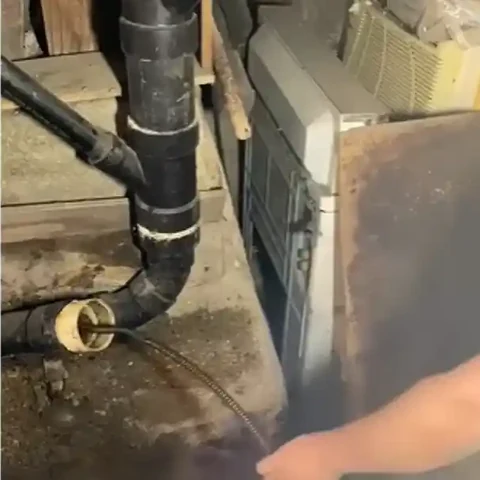
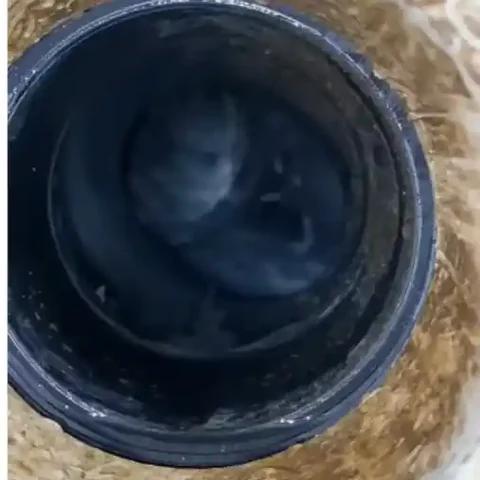
Before and after clearing a blocked sewer line.
The four services Village homeowners call about
Sewer line cleaning
Roots are the usual reason a Village line clogs. A provider can cut them back and clear the line, which is the job covered under sewer line cleaning. Just remember that cutting roots buys time, and it doesn't close the gap they came through.
Sewer camera inspection
A camera shows where roots enter, whether the pipe is sagging, and what the line is made of. It's especially useful when you're buying a home here, or when you've taken over a second home you haven't lived in. A sewer camera inspection turns a hunch into a record.
Drain cleaning for rentals and part-time homes
Slow sinks, smelly floor drains and tubs that don't empty are common after guests or after a house sits empty. Drain cleaning handles the fixture level, and a short visit between stays can head off bigger problems.
Sewer line repair
If a camera shows a cracked, offset or root-filled section, sewer line repair is the next step. Trees and roots affect which method works, and a provider should show you why they chose it.
If you own or manage a rental
Short-term rentals mean a lot of turnover, and a lot of drains used by people who don't know the house. A few habits help.
- Put a clear "no wipes, no paper towels, no grease" note where guests will see it.
- Run water in every drain between stays, especially rarely used ones.
- Keep a record of drain service dates and what was found.
- Ask providers about quick between-stay visits and about documentation for your records.
- Know where each property's cleanout is, and share that with whoever manages it.
Not every provider will offer scheduled visits, so ask. For multi-unit or lodging-style properties, commercial drain cleaning covers what to ask about.
What to ask when roots are the problem
If a provider says roots are the cause, a few questions keep the job honest:
- Where do the roots enter, and how far from the cleanout?
- Can I see the footage?
- Will cutting them be enough for now, and how soon might they return?
- What would it take to close the gap, such as a spot repair or lining?
- Is a tree nearby the likely source, and does it matter for where the repair goes?
Roots in a Village lot are rarely a one-visit story. A provider who explains the options and leaves the choice to you is doing it right.
Village homeowner checklist
- Find your cleanout and note where it is.
- Before leaving for a long stretch, run water in every drain and floor drain so the traps stay sealed.
- Don't plant thirsty trees or shrubs directly over the sewer line.
- Camera the line before you buy, and again if drains clog more than once.
- Confirm whether your property is on sewer or septic, and keep that answer on file.
- Give a neighbor or manager your provider's number in case something happens while you're away.
When you call, give the property address and any access instructions, especially if the house is empty. A provider can plan the visit much better with those details.
Nearby areas we cover
Hot Springs Village is one part of Hot Springs Drains & Sewer coverage. For the city itself, see downtown Hot Springs, or look at Lake Hamilton, Lake Catherine and Piney. We also take calls from Jessieville, Pearcy and Royal, and coverage there depends on the provider.
We're open Monday to Saturday, 8 am to 6 pm, and closed Sundays. If sewage is coming up inside a home, stop using water, keep people and pets away and call when we open.
Hot Springs Village drain questions
Is my Hot Springs Village home on sewer or septic?
It depends on the property. Check with the utility or the community office, and review your property records. Don't assume, because the answer changes what kind of work you need.
Why do roots clog sewer lines in wooded neighborhoods?
Roots seek water and find it at joints and cracks. They grow inside the pipe and catch debris, until the line backs up. Cutting them clears the line, but the opening remains.
How often should a rental's drains be checked?
There's no fixed schedule. A quick check between stays catches slow drains early. If the property is busy, ask a provider about maintenance visits.
What should second-home owners do about drains before leaving?
Run water in every drain, including floor drains, so the traps stay sealed. Know where your cleanout is, and leave a contact for someone who can let a provider in.
Which ZIP codes do you cover around the Village?
Our coverage includes ZIP codes 71909 and 71910 in Hot Springs Village, plus 71901, 71902, 71903, 71913 and 71914 across Hot Springs.