
What is drain cleaning?
Drain cleaning is clearing the blockage out of a single fixture's drain or a short branch line, so water moves freely again. It covers kitchen sinks, bathtubs, showers, laundry lines and floor drains. It is a different job from clearing the main sewer line, which carries everything out of the house at once.
That difference matters. If one fixture is slow and the rest of the house drains fine, you almost certainly have a local clog. If several fixtures act up together, the main line is the suspect, and you want sewer line cleaning instead. The first question a good provider asks is how many drains are affected. Call (501) 530-9119 and we'll connect you with an independent provider who can sort out which one you have. It is part of the wider range of drain and sewer services in Hot Springs we send calls for.
How drain cleaning works
Providers pick the method to match the clog. Common ones:
- Plunging and trap cleaning. The first step for sinks and tubs. Pulling and cleaning the P-trap, the curved pipe under a sink, removes most hair, soap and food buildup.
- Hand augers and drain machines. A flexible cable with a cutting or hooking head goes into the drain and breaks through the clog or pulls it out. Drum machines reach farther, into branch lines and the main.
- Hydro-jetting. High-pressure water scours grease and scale off the pipe wall. It is a better fit for heavy buildup than a cable, which only punches a hole. See hydro-jetting for when it makes sense.
- Camera follow-up. When a drain clogs again and again, a camera finds the reason: a sag, a crack or roots. A sewer camera inspection turns repeat clogs into a diagnosis.
Access matters too. A cleanout, the capped pipe that gives direct entry to the line, makes the job quick. Without one, the provider works through the fixture, sometimes by pulling a toilet or a trap.
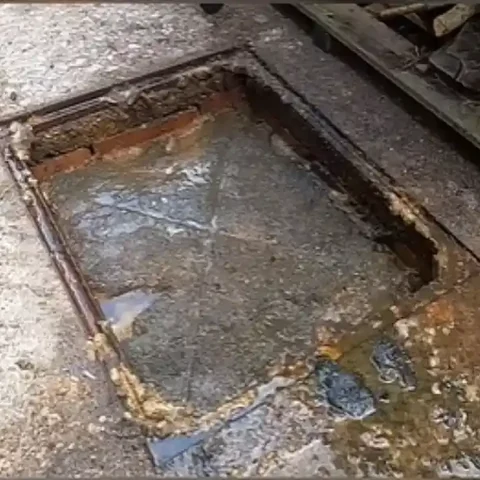
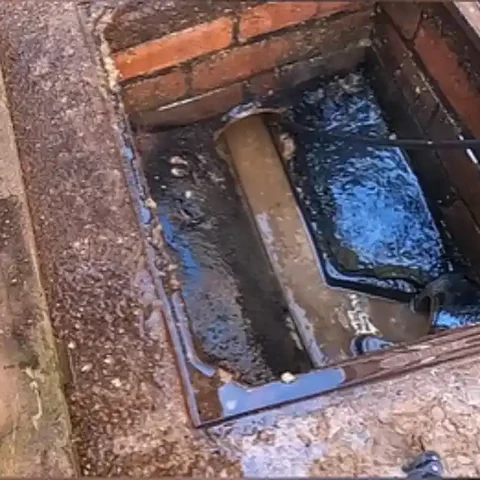
Before and after cleaning a clogged floor drain.
8 signs a drain needs cleaning
- Water drains slowly from one sink, tub or shower.
- Standing water sits in the sink or tub after use.
- The drain gurgles when you run water nearby.
- A sour or sewer smell comes from one fixture.
- The washing machine overflows its standpipe.
- A floor drain holds water or backs up after laundry.
- Plunging helps for a day, then the clog returns.
- Small black flecks or gunk surface in the water.
One slow drain is a nuisance. Two or three at once is a message from the main line, so treat it that way.
| What you see | What it usually means |
|---|---|
| One fixture is slow, the rest are fine | A local clog in that fixture's own drain or trap. |
| Two fixtures slow in the same bathroom | A clog in the shared branch line they join. |
| Toilets gurgle when the tub drains | A restriction in the main line, or a vent problem. |
| Floor drain backs up during laundry | A blocked laundry or main line. |
| Smell, but water drains normally | A dry trap or a vent issue, not a clog. |
What clogs drains in Hot Springs homes
The causes are mostly ordinary, and a few are particular to the area.
- Hair and soap scum in tubs and showers.
- Grease and food in kitchen lines. Grease cools inside the pipe and coats it.
- Wipes and paper products. "Flushable" wipes don't break down like toilet paper.
- Lint and debris in laundry lines and floor drains, which also collect dirt in utility rooms and garages.
- Older pipe. A lot of housing here is decades old, and rough, corroded or shifted pipe catches debris faster than smooth new pipe.
- Heavy use. Rentals turn over, guests flush things they shouldn't, and restaurants and hotels downtown send a lot of grease down the line. Rental owners in places like Hot Springs Village see this often.
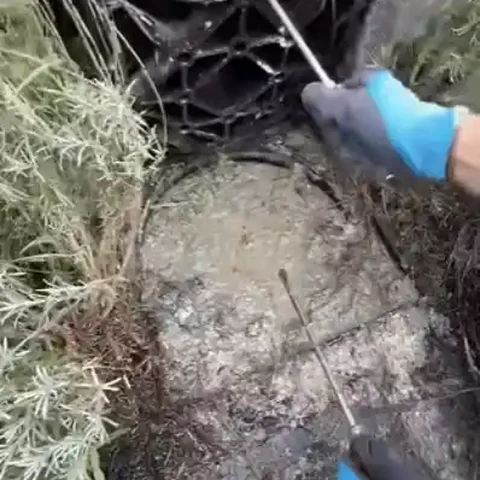
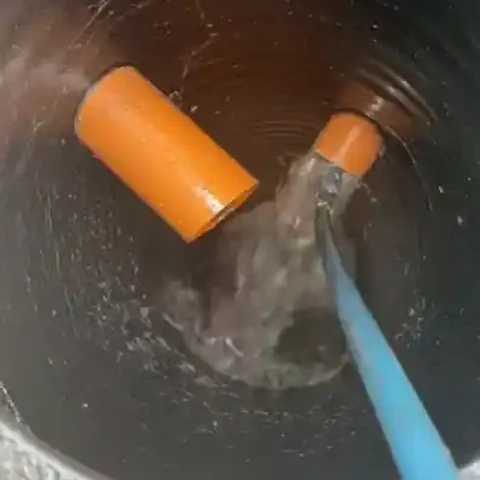
Before and after clearing a clogged outdoor drain.
Safe checks to try first
Before you call, a few things are worth trying. They cost nothing and rule out the simple cases.
- Plunge with a cup plunger for sinks and a flange plunger for toilets, with enough water to cover the cup.
- Clear the strainer or pop-up stopper and pull out the hair.
- Place a bucket and unscrew the P-trap under the sink to clean it.
- Run very hot tap water for a minute. Skip boiling water, which can soften plastic pipe and crack porcelain.
- Check whether other fixtures are slow. If they are, stop, because that points to the main line.
Don't pour chemical drain cleaner into a drain that is already full of standing water, and never mix cleaners. It can splash back, produce fumes, and make the next person's job riskier.
Find your cleanout before you need it. Knowing where it is saves time on the phone and on the visit.
What a provider does on a drain cleaning visit
- Asks what's affected. One drain or several, and since when.
- Locates access. A cleanout, the fixture trap, or the floor drain itself.
- Clears the blockage. With a cable, machine or jetter, depending on the clog.
- Tests the flow. They run water to confirm it drains freely, often for several minutes.
- Explains what they found. If it points to roots or damaged pipe, they should say so and offer a camera look.
While you wait for the visit, clear the area under the sink or around the floor drain, move anything valuable out of the way, and note when the problem started and what changed. If you know where your cleanout is, say so on the call. A provider can plan the visit much better with those details, and it can shorten the time on site.
Ask them to tell you plainly if they think the clog will return, and why. For anything beyond a simple cleaning, ask for the quote in writing. Our main Hot Springs page covers how the referral works and what to ask any provider.
How to keep drains clear
Most clogs are slow to build, which means most are avoidable. A few habits do the work:
- Fit a strainer over tub, shower and kitchen drains and empty it regularly.
- Let cooking grease cool in a can and throw it out. Don't pour it down the sink.
- Put wipes, cotton products and paper towels in the trash, not the toilet.
- Pour a little water down floor drains and rarely used fixtures from time to time. The trap holds a water seal that blocks sewer smell, and it dries out when a drain sits unused, which is common in vacation homes and empty rentals.
- Rinse the laundry standpipe area and clear lint from filters.
Landlords, short-term rental owners and restaurants can ask a provider about scheduled maintenance visits. Not every provider offers them, but heavy-use drains benefit most.
What changes the cost of drain cleaning
Providers set their own prices, and we don't quote them. These are the things that move any quote.
| Factor | Why it matters |
|---|---|
| Which drain | A bathroom sink is simpler than a floor drain or a main branch. |
| Access | A cleanout is quick. Pulling a toilet or trap takes more time. |
| Cause | Hair, grease, roots and broken pipe call for different tools. |
| Number of drains | Several affected drains often mean a bigger problem upstream. |
| Camera | A camera adds time but shows the cause of repeat clogs. |
When a clogged drain is an emergency
Most clogs can wait for a scheduled visit. These can't:
- Sewage is coming up through a floor drain, tub or shower.
- Several fixtures are backing up at once.
- Water is spreading across the floor.
Sewage carries bacteria, so stop using water in the house, keep people and pets away, and call us. We're open Monday to Saturday, 8 am to 6 pm, and closed Sundays. If a backup starts outside those hours, keep the water off and call when we open.
Drain cleaning questions
How do I know if it's one drain or the whole line?
Run water at other fixtures. If only one drains slowly, it's probably a local clog. If several are slow, gurgle or back up, the main line is likely involved.
Is drain cleaning the same as hydro-jetting?
No. Drain cleaning is the job, and cables and jetters are tools for it. Jetting uses high-pressure water and suits heavy grease or scale. A cable is usually enough for a simple clog.
Will drain cleaning damage my pipes?
On sound pipe, cabling and jetting are routine. Old or cracked pipe can be damaged by any method, which is why a camera comes first when the pipe is in doubt.
Why does my drain clog again after cleaning?
A repeat clog usually has a cause the cleaning didn't remove: grease on the pipe wall, roots, a sag or a damaged joint. A camera inspection finds it.
Can I clean a floor drain myself?
You can lift the grate, remove debris and rinse the basin. If water backs up or smells of sewage after that, stop and call. Several drains acting up often means the main line.
How soon can someone come out?
Call Monday to Saturday, 8 am to 6 pm, and ask the provider for the earliest time. Availability depends on their schedule, so we can't promise a specific arrival.