
What is commercial drain cleaning?
Commercial drain cleaning is clearing and maintaining the drain and sewer lines of a business or multi-unit property, where the lines are bigger, the use is heavier and a blockage costs real money. It covers restaurant kitchens, hotels, apartment buildings, offices, retail space and rental properties.
The tools overlap with residential work, but the stakes don't. A clogged home drain is an inconvenience. A blocked kitchen line can shut a restaurant mid-service, and a backup in a rental can mean an angry tenant and a claim. Call (501) 530-9119 and we'll connect you with an independent provider who handles commercial calls. This is the business side of how sewer problems show up in Hot Springs.
Who needs it
- Restaurants, cafes and bars. Grease, food solids and heavy daily use.
- Hotels and lodging. Many rooms on shared stacks, constant laundry and guest traffic.
- Short-term and long-term rentals. Tenant and guest turnover, and the occasional flushed wipe.
- Apartment buildings and property managers. Shared lines mean one clog hits several units.
- Offices and retail. Restrooms, break rooms and older plumbing.
Hot Springs has plenty of all five. Visitors fill the lodging and restaurants along Central Avenue, and lines in older buildings were rarely designed for today's loads. See drain and sewer services in downtown Hot Springs for how that plays out.
How commercial drain cleaning works
- Cable machines. Heavier drum machines clear blockages in kitchen, floor and main lines.
- Hydro-jetting. High-pressure water cuts the grease film that cables leave behind. It's the usual choice for restaurant lines, after a camera confirms the pipe can take it. See hydro-jetting.
- Camera inspection. Shows what's inside lines you can't see, and gives managers a record. A sewer camera inspection is also useful before buying or leasing a building.
- Grease trap and interceptor service. Traps catch grease before it enters the sewer, but they need regular cleaning. Pumping is often a separate service from drain cleaning, so ask whether the provider does it or recommends someone who does.
- Floor drains. Commercial kitchens and utility rooms rely on them, and they clog with debris and sludge.
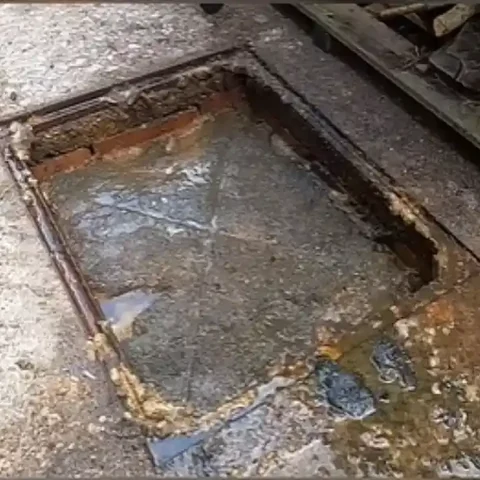
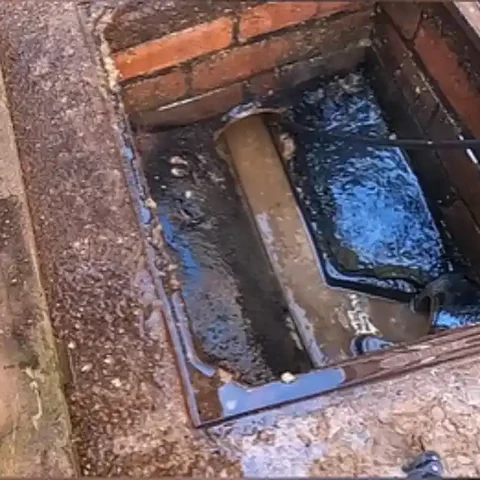
A greasy floor drain, before and after cleaning.
8 warning signs in a commercial building
- Kitchen sinks or floor drains drain slowly during service.
- Standing water or sludge in a floor drain after closing.
- A grease or sewer odor in the kitchen or back of house.
- Restroom fixtures gurgle when others flush.
- More than one unit reports backups.
- Flies or pests around floor drains.
- The same line needs clearing every few weeks.
- A grease trap is full, overdue or hasn't been checked.
Recurring problems are a maintenance issue, not bad luck. A scheduled program usually costs less than repeated emergencies, though not every provider offers one.
What clogs commercial drains
- Fats, oils and grease. Hot grease cools and hardens on the pipe wall. Arkansas grease rules involve state requirements plus local ones, so confirm what applies to your property with Hot Springs Utilities.
- Food solids. Rice, pasta, coffee grounds and scraps that skip the strainer.
- Restroom products. Wipes, paper towels and sanitary items.
- Roots and old pipe. Older buildings can have clay or cast iron lines that crack and shift.
- Peak use. Event weekends, racing season crowds and full lodging push lines past what they handle on slow days.
- Neglect. Traps and strainers that aren't maintained fail all at once.
Landlords, property managers and short-term rentals
Rental owners deal with different problems from restaurants, but the pattern is similar: shared lines, heavy turnover and tenants who call at the first sign of trouble.
- Guests flush things they shouldn't, especially wipes and paper products.
- Vacant units dry out traps, which brings sewer smell between stays.
- Shared stacks mean one blockage hits several units.
- Responsibility for a clog depends on the lease and the cause, so document what you find.
Short-term rental owners in Hot Springs Village and across the area often add a drain check between guest stays. Ask providers what they can document, such as photos and itemized invoices.
What staff and managers can do
- Scrape plates and use strainers, not sinks, for food scraps.
- Collect used grease in containers and keep it out of drains.
- Know where your cleanouts, traps and shutoffs are, and label them.
- Keep trap and interceptor service records.
- Run water in rarely used floor drains so the trap stays sealed.
- Report slow drains early instead of waiting for a backup.
Don't pour chemical drain cleaners into commercial lines, and don't let staff try. Splash-back is a hazard, and chemicals leave residue that complicates the next cleaning.
Keep a simple log of when each drain was cleaned, by whom, and what they found. It helps with inspections, insurers and landlords.
What a commercial visit looks like
- Scopes the problem. Which lines, which units, how often and since when.
- Plans around operations. Ask whether the work can happen outside service hours.
- Clears the blockage. With a cable, a jetter or both.
- Runs a camera. To find the cause and confirm the line is clear.
- Documents the work. Photos, notes and an invoice you can file or forward.
- Recommends a plan. One-off, repair or scheduled maintenance.
If the blockage is in the main, sewer line cleaning is the next step. Our page on drains and sewers across Garland County explains how referrals work and what to ask any provider.
What a maintenance program usually includes
A scheduled program turns surprise backups into planned visits. What's included varies by provider, but a sensible one often covers:
- Regular cabling or jetting of the lines that clog most.
- Floor drain cleaning and trap checks.
- Grease trap or interceptor service, or coordination with whoever pumps it.
- A camera check once in a while, or after any repeat problem.
- Written notes after each visit, so you can see what changed.
The right interval depends on the kitchen, the building and the season. A busy downtown restaurant and a small office suite won't need the same plan. Ask the provider to explain their reasoning rather than offering a fixed schedule.
Questions to ask a commercial provider
- Do you work outside service hours, and what does that mean for scheduling?
- Can you document the work with photos, footage and an itemized invoice?
- Do you handle grease traps, or recommend someone who does?
- What's your plan if the problem is in the main line or the public sewer?
- Can you provide your Arkansas plumbing license number and proof of insurance?
A commercial job is easier when everyone knows who is responsible for what. Ask early, and put anything big in writing.
What changes the cost of commercial drain cleaning
Commercial quotes depend on the building more than anything. We don't quote prices; here is what tends to shape them:
| Factor | Why it matters |
|---|---|
| Number of lines | More drains, units or stacks mean more time. |
| Grease load | A heavy kitchen line takes more passes and may need jetting. |
| Access | Cleanouts and open floor drains speed things up. |
| Schedule | Work around service hours may be priced differently. |
| Maintenance plan | Regular visits can be arranged differently than one-offs. |
| Documentation | Camera footage and reports add time but help with records. |
When a commercial backup can't wait
A backup is urgent when sewage reaches a dining area, restroom or sales floor, or when it shuts down service. Stop using water in the affected area, keep people away, and call us. We're open Monday to Saturday, 8 am to 6 pm, and closed Sundays. If it starts outside those hours, keep the water off and call when we open. A backup in a food area can affect whether you can operate, so check with the health authority that covers your business.
Commercial drain cleaning questions
How often should a restaurant's drains and grease trap be cleaned?
There's no single schedule. It depends on volume, the kind of kitchen and any rules that apply to your property. Ask a provider to recommend an interval based on your actual use.
Can I set up scheduled maintenance?
Some providers offer it and some don't. Ask whether they offer recurring visits and what's included, such as cleaning, jetting and a camera check.
Who is responsible for a clog in a rental, the landlord or the tenant?
It depends on the lease and the cause. A clog from a misused fixture may fall on the tenant, while a failing pipe usually falls on the owner. Check your lease and document what's found.
Can the work happen outside business hours?
Sometimes. It depends on the provider's schedule. Ask about timing when you call us, Monday to Saturday, 8 am to 6 pm.
Is hydro-jetting a good fit for restaurants?
Often, because it cuts the grease film that cables leave behind. A provider should check the pipe first, since high pressure isn't right for damaged lines.
Can the provider give me documentation for an inspector or landlord?
Many can provide itemized invoices, photos and camera footage. Ask before the visit, so the paperwork you need is part of the job.