
What is hydro-jetting?
Hydro-jetting cleans a drain or sewer line with a stream of high-pressure water instead of a mechanical cable. A hose carries the water into the pipe, a nozzle sends it out in several directions, and the force scours grease, scale and sludge off the pipe wall and flushes it downstream.
A cable punches a hole through a clog and leaves a coating behind on the pipe wall. Jetting cleans the whole inside of the pipe, which is why it's the go-to for heavy buildup and for lines that keep clogging. It isn't right for every pipe, though, and the honest answer to "do I need it?" often depends on what a camera shows. Call (501) 530-9119 and we'll connect you with an independent provider who can tell you which tool fits. It's one of the local drain services we send calls for around Hot Springs.
How hydro-jetting works
A jetting rig is a pump, a high-pressure hose and a nozzle. The nozzle matters as much as the pressure.
- Penetrating nozzles. Aim forward to break through a dense blockage and open a path.
- Rotating or spray nozzles. Send jets backward and sideways. The jets pull the hose forward and clean the pipe wall on the return pass.
- Root-cutting nozzles. Shear small roots from the pipe interior. Thick roots usually need a mechanical root cutter first.
The provider feeds the hose through a cleanout, works it forward, then draws it back while the nozzle scours the wall. Water and debris move toward the downstream end, so the line has to be open and able to carry it away. Many providers run a camera afterward to confirm the line is clean. See sewer camera inspection for what that shows.
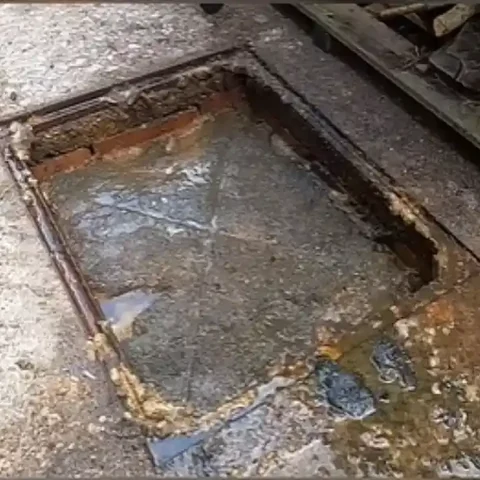
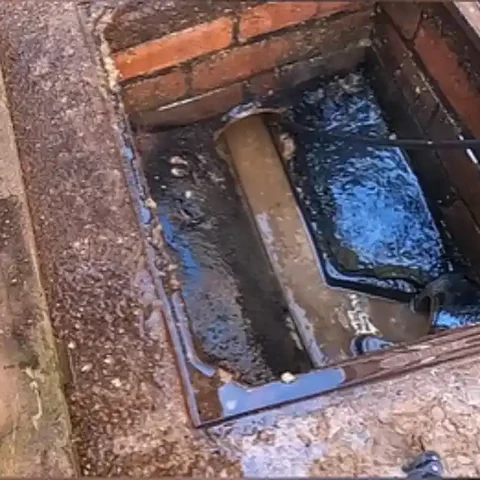
Before and after cleaning a greasy floor drain.
Hydro-jetting vs snaking
Both are legitimate. The difference is what they leave behind.
| Question | Cable (snake) | Hydro-jetting |
|---|---|---|
| What it does | Bores through or hooks the clog. | Scours the whole pipe wall with water. |
| Best for | A single clog, soft debris, a quick opening. | Grease, scale, sludge, repeat clogs. |
| Roots | Cuts and clears a path. | Clears small roots and cleans after cutting. |
| Residue | Leaves a coating on the pipe wall. | Removes most of it. |
| Old or cracked pipe | Can still catch and damage it. | Needs a camera first. |
8 signs hydro-jetting may be the right call
- A line clogs again every few months after being cabled.
- Drains slow down gradually instead of all at once.
- A kitchen or restaurant line carries a lot of grease.
- A camera shows a coating of grease or scale on the pipe wall.
- Roots have been cut but small roots remain.
- A floor drain smells and holds sludge.
- A laundry line is packed with lint and soap buildup.
- A provider has told you the line is narrowed but not damaged.
The common thread is buildup. If the problem is a broken pipe or a collapsed section, jetting won't help and may make it worse.
What jetting is best at removing
- Grease and fat. Cooking residue cools and hardens on the pipe wall. Restaurants and hotels, like the ones downtown, deal with it constantly.
- Soap scum and sludge. A film of soap, hair and organic matter that narrows the line.
- Mineral scale. Hardened deposits that cables skate over.
- Small roots. Fine, hair-like roots that grow inside joints and trap debris.
- Debris plugs. Wipes and paper clumps that a cable may only partly clear.
For restaurants, hotels and rentals, a regular jetting schedule can keep lines open. Ask a provider whether they offer that for commercial drain cleaning, because not every provider does.
When hydro-jetting is the wrong tool
High pressure is a feature, but it's also a risk on weak pipe. Providers should be careful or skip jetting when:
- The pipe is cracked, collapsed or has separated joints.
- The line is bonded fiber (Orangeburg) or other soft, deteriorating material.
- There is a bad sag that holds water, which can make it hard to carry debris away.
- The camera hasn't looked at the line, and the pipe is old or unknown.
- The cleanout is missing or the line has no good way to drain downstream.
A lot of housing in Hot Springs is decades old. That doesn't mean jetting is off the table, but it does mean a camera first is common sense. If a camera shows damage, sewer line repair is the next conversation.
Don't try jetting with a pressure washer or a rental rig unless you know what you're doing. Hoses can whip, water can blow back, and weak pipe can crack.
Safe checks before you call
- Work out whether it's one drain or the whole house. Run water at a few fixtures.
- Find your cleanout and note where it is.
- Tell the provider about any past clogs, repairs or root problems.
- Skip chemical drain cleaners before a visit. Residue can irritate skin and complicate the work.
Tell the provider if your house is older or if anyone has mentioned the pipe material. It helps them decide whether to run a camera first.
What a hydro-jetting visit looks like
- Talks it through. What's clogging, how often, and what's been tried.
- Checks the pipe. A camera first if the pipe is old or in doubt.
- Opens a path. A cable may open a heavily blocked line before jetting.
- Jets the line. Forward, then back, cleaning the wall.
- Confirms the result. Water flow, and often a second camera pass.
- Explains the findings. What was removed, and whether anything else looks wrong.
Ask to see any camera footage that shaped the decision. To see how the referral works and what to ask any provider, start at the Hot Springs overview.
Where jetting helps most around Hot Springs
Hot Springs has a mix of buildings, and jetting fits some better than others.
- Restaurants and hotels downtown. Kitchens send grease into lines that run through older buildings. Jetting removes the film a cable leaves behind, and it can be scheduled around service hours.
- Rentals and vacation homes. Short stays mean heavy use and the occasional wipe or paper-towel plug. Owners in Hot Springs Village and elsewhere sometimes jet lines between guests.
- Older houses with greasy kitchen lines. Jetting can restore flow, as long as a camera confirms the pipe can take it.
- Homes with recurring clogs. If the same line has been cabled more than once, jetting plus a camera is a sensible next step.
What to expect on the day
Jetting is louder and wetter than cabling. The rig runs outside, the hose goes in through the cleanout, and the job uses a good amount of water. Clear a path to the cleanout, move cars and furniture, and keep children and pets away from the work area.
Ask how they handle the debris the water pushes along, and whether they'll run a camera afterward. A good provider can explain both in a sentence. If something shows up that worries them, such as a crack or an offset joint, they should tell you before the visit ends.
What changes the cost of hydro-jetting
We don't quote prices, because each provider sets their own. For hydro-jetting, these are the things that shift a quote up or down.
| Factor | Why it matters |
|---|---|
| Length of line | More pipe means more time and water. |
| Amount of buildup | Heavy grease takes more passes. |
| Pipe size and access | A cleanout makes it simple. Without one, setup takes longer. |
| Camera | A camera before and after adds time but confirms the result. |
| Commercial scheduling | Regular visits for restaurants may be priced differently. |
Is hydro-jetting an emergency fix?
Usually it's a planned job. If sewage is coming up through floor drains, a tub or a toilet, treat it as an emergency, stop using water, keep people and pets away, and call us. We're open Monday to Saturday, 8 am to 6 pm, and closed Sundays. A provider may clear the blockage first and recommend jetting afterward. If it starts outside our hours, keep the water off and call when we open.
Hydro-jetting questions
Is hydro-jetting safe for old pipes?
It can be, if the pipe is sound. Cracked, collapsed or soft pipe can be damaged by high pressure, which is why a camera usually comes first on older lines.
Hydro-jetting or snaking: which do I need?
A cable suits a one-off clog. Jetting suits grease, scale and repeat clogs, because it cleans the whole pipe wall. A provider should explain why they recommend one.
Does hydro-jetting remove tree roots?
It clears small roots well. Thick roots usually need a cutter first. Neither fixes the crack or joint where roots enter, so they can grow back.
How long does hydro-jetting last?
It depends on the cause. A cleaned grease line can stay clear for a long time if habits change. A line with roots or a damaged section can clog again sooner.
Does hydro-jetting need a cleanout?
A cleanout is the easiest way in. Without one, a provider may work through a toilet or fixture, or recommend installing a cleanout so future visits go smoothly.
Is hydro-jetting a good fit for restaurants?
Often, because grease is the main problem. Restaurants should ask about scheduled jetting and about any local grease rules that apply to their property.